Flower Art: A Designer’s Review for Real Embroidery Projects
As a designer who spends more time looking at stitch density and fabric tension than I do admiring pretty pictures, I approach every new digital asset with a healthy dose of skepticism. The market is flooded with "cute" graphics that look wonderful on a screen but fall apart under the needle. That is why I take the time to evaluate designs like Flower Art before committing them to fabric, client orders, or my own small shop inventory. This review isn’t just about aesthetics; it is about how this Illustrations category piece translates into a tangible, sellable embroidery project.
First Impressions and Visual Personality
When you first load the Flower Art file into your digitizing software or design app, the immediate takeaway is its clean, minimalist energy. It falls squarely into the Graphics niche, specifically drawing from the popular line art trend. There is no clutter here—just confident, flowing strokes that suggest petals and stems without over-defining them. For a designer, this is a double-edged sword. On one hand, it feels modern and sophisticated. On the other, it demands precision in execution because there are no hidden textures or heavy fills to mask stitching errors.
The mood created by this design is airy and elegant. It does not scream for attention like a bold, colorful applique might; instead, it whispers. This makes it an excellent candidate for brands that value subtlety and high-end presentation. Whether you are creating custom apparel or delicate personalized gifts, the visual personality of Flower Art suggests a product that is meant to be cherished, not just worn. It feels appropriate for a boutique branding package or a high-end wedding favor, where the goal is refinement rather than flashiness.
Real-World Application: The Tote Bag Scenario
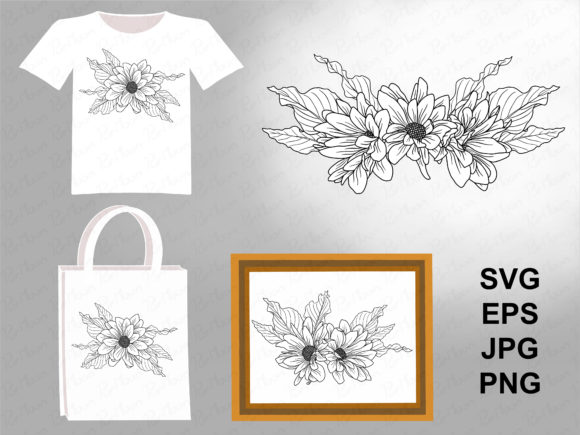
To truly understand how a design performs, you have to imagine it on a finished product. Let’s say I am preparing a custom embroidered tote bag design for an upcoming craft fair. I need something that stands out on a table full of busy patterns but doesn’t overwhelm the canvas tote itself. Flower Art fits this scenario perfectly.
Imagine placing this line art centered on a natural cotton canvas bag. Because the design relies on open space, it allows the texture of the fabric to become part of the artwork. If I were to use a single thread color, perhaps a deep charcoal or a soft sage green, the contrast would be striking against the neutral background. The negative space becomes as important as the lines themselves. This is crucial for Etsy sellers and small shop products who want their items to look professional and intentional. A poorly executed line art piece can look like a mistake; a well-stitched one looks like high fashion.
I also envision this design on a sweatshirt embroidery project. Placing a delicate floral line art motif on the chest of a heavyweight hoodie creates a nice juxtaposition between the rugged garment and the refined graphic. It appeals to the customer who wants comfort but still cares about aesthetic details. It transforms a basic commodity into a handmade product with character.
Where Caution Is Required
However, not every surface is a good friend to line art. When evaluating Flower Art for real use, I urge designers to be careful with certain applications. First, avoid tiny hoop sizes. Line art often contains thin curves and intersecting lines that can blur together if the stitch length is too long or the resolution is too low. If you are trying to fit this into a 4x4 hoop on a very small area, you may lose the integrity of the shape.
Second, consider the fabric texture. While line art looks great on smooth cottons and linens, it can get lost on heavily textured fabrics like bouclé or thick terry cloth. The bumps in the fabric will distort the clean lines, making the flowers look jagged or uneven. Similarly, stretchy fabrics require a strong stabilizer to prevent the lines from wavering as the material moves. Without proper stabilization, what should be a crisp graphic becomes a wobbly mess.
Dark fabrics present another challenge. If you choose a light thread color for Flower Art on dark denim or black jersey, you must ensure the thread has enough coverage. Sometimes, a single pass of running stitch or satin stitch isn't opaque enough, leading to a "see-through" effect that ruins the illusion of a solid line. In these cases, testing thread colors is non-negotiable.
Stitch Clarity and Technical Considerations
From a technical standpoint, the success of this machine embroidery design hinges on how the digitizer handled the transitions. Since this is primarily line work, we are likely looking at a combination of satin stitch for outlines and running stitch for finer details. The key is ensuring that the stitch density is balanced. Too dense, and the fabric pucks; too sparse, and the lines look broken.
I recommend inspecting the design in black and white mockups before production. This helps you see if the lines hold up without the distraction of color. Does the composition feel balanced? Do any corners look crowded? These questions are vital for maintaining brand consistency. If you are selling these as digital embroidery file assets or using them for commercial projects, your reputation depends on the clarity of the final output.
Also, think about the end user. Will they wash the item frequently? An embroidered patch or a kitchen towel needs to withstand abrasion. Delicate line art can fray if the threads aren't secured properly at the start and end points. Always check whether the design works for both personal and commercial projects, and confirm licensing before selling finished items. You do not want to accidentally violate terms when listing a holiday gift set on your online store.
Final Verdict for Crafters and Sellers
Flower Art is a versatile, high-potential design that rewards careful execution. It is ideal for embroidered patches, aprons, pillow covers, and tea towels where a touch of elegance is desired. It also shines in nursery decor and wedding gifts, where soft, romantic imagery is preferred over bold statements.
For craft business owners, this design offers a way to create printable mockups and design assets that look premium. It elevates simple merchandise into something special. However, remember that beauty in line art is in the details. Take the time to test on scrap fabric. Check your hoop size. Use the right stabilizer. And most importantly, trust your eye. If the lines look crisp and clean on your test swatch, you are ready to create a finished product that customers will love.
In summary, Flower Art is not just a pretty picture; it is a tool for creating meaningful, beautiful handmade goods. By understanding its strengths and limitations, you can use it to build trust with your buyers and showcase your skills as a thoughtful, professional designer.