Line Drawing Orchid Flower Illustrations
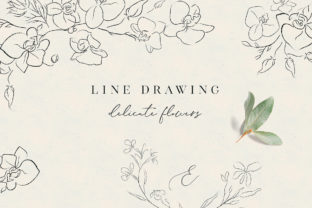
When I first opened the folder containing Line Drawing Orchid Flower Illustrations, my immediate thought wasn’t about the technical specs, but about the mood. As a designer who spends half my day staring at screen pixels and the other half troubleshooting stitch errors on a hoop, I look for assets that translate well from digital to physical. This set of line drawing delicate orchid flowers illustrations includes 11 elements flowers, wreaths and frames All the images transparent background. Perfect for cards, logo, branding, wedding invita—wait, let’s pause there. The description cuts off, which is common in raw asset packs, but the visual potential is clear.
Orchids are notoriously difficult to embroider successfully. They have complex, asymmetrical structures and delicate curves that can easily become muddy if the stitch density is too high or the thread choice is wrong. These Illustrations offer a solution: by stripping away color and shading, they rely on clean lines and negative space. This makes them incredibly versatile for an embroidery project where clarity is king. It feels less like a rigid pattern and more like a sophisticated sketch waiting to come alive with texture.
The First Impression: Mood and Visual Personality
The visual personality of this design set is elegant, airy, and modern. Unlike traditional floral motifs that feel heavy or rustic, these line drawings exude a sense of lightness. When you place one of these Graphics onto a fabric swatch in your mind’s eye, it doesn’t scream; it whispers. It suggests a boutique aesthetic rather than a mass-market vibe.
This is crucial for Etsy sellers and small shop product creators. Buyers today are looking for items that feel curated and intentional. A bold, solid-fill flower might look great in a mockup, but it can sometimes feel cheap when stitched into polyester or cotton blends. The line art approach mimics the look of high-end fashion embroidery, where the fabric itself becomes part of the design. It creates a subtle interplay between the thread and the material, elevating the perceived value of the handmade product.
Real-World Application: From Screen to Stitch
Let’s talk about how this actually performs in a real scenario. Imagine you are preparing a custom embroidered tote bag for a client who wants something chic for their morning coffee run. You pull up one of the orchid frames from this set. Because the design relies on outlines, you have the freedom to choose your thread colors strategically. Instead of being locked into a specific palette, you could use a neutral beige thread on a canvas bag for a tonal look, or pop a soft pastel pink against navy blue for contrast.
I also see this working beautifully for personalized gift items. Consider a baby onesie or a nursery wall hanging. The delicate nature of the orchid lines pairs perfectly with soft fabrics. However, this is where the "delicate" aspect requires careful planning. If you are stitching this on a tote bag design made of thick canvas, you might need to adjust the stitch density to ensure the lines hold their shape without puckering the heavy fabric. Conversely, on a silk pillow cover, the same design might require a finer needle and lighter stabilizer to prevent damage.
For custom apparel like sweatshirts, this design shines. A single orchid outline placed over the heart or centered on the back of a crewneck sweatshirt looks incredibly professional. It bridges the gap between casual wear and high-fashion statement pieces. It’s not just a decoration; it’s a focal point that draws the eye without overwhelming the garment.
Where Caution Is Required
While these designs are beautiful, they are not foolproof. There are specific situations where Line Drawing Orchid Flower Illustrations might struggle:
- Small Hoop Sizes: If you try to shrink these intricate lines down to fit a tiny 4x4 inch hoop, you risk losing detail. The curves may merge, and the "breathing room" in the design will disappear, resulting in a blob rather than a flower.
- Textured Fabrics: Trying to stitch fine lines onto a heavily textured fabric like bouclé or chunky knit can obscure the design. The thread gets lost in the weave, and the crispness of the line art is defeated.
- Stretchy Fabric: Without proper stabilization, the tension required to pull the thread taut for a clean line can distort stretchy materials like jersey or spandex blends.
- Dense Stitch Areas: Even though it’s line art, some parts of the frame or wreath might be dense. If the stitch density is too high for the fabric weight, you’ll get stiff, cardboard-like areas that ruin the drape of the finished item.
Technical Notes for the Embroidery Designer
Before you commit this machine embroidery design to production, there are a few practical steps I recommend. First, always test the design on scrap fabric that matches your final project in weight and texture. This isn’t just a formality; it’s a necessity. You need to see how the running stitch interacts with the specific weave of your cloth.
Second, inspect the small details closely. In digital graphics, thin lines can look sharp on a monitor. On fabric, however, they can break or look jagged if the resolution of the stitch path isn’t optimized. Check whether the design works for both personal and commercial projects by reviewing the licensing terms carefully. Many digital embroidery file packs have restrictions on how many finished units you can sell. If you are an Etsy seller relying on volume, unclear licensing can lead to serious legal headaches later.
Also, consider the applique design potential. While this set is described as line drawings, the frames and wreaths could potentially be used as applique bases if you layer them correctly. Imagine cutting out the orchid shape from contrasting felt and stitching the line art around the edge for definition. This adds dimension and hides any minor stitching imperfections, making it a safer bet for beginners.
Impact on Brand Consistency and Customer Trust
Using high-quality design assets like these helps build brand consistency. When your craft business offers products that look cohesive and professionally executed, customers trust your craftsmanship. A messy, overly dense embroidery job can signal low quality, even if the product is handmade with love. Clean lines, on the other hand, signal precision and care.
Furthermore, these designs are highly adaptable for printable mockups. Before you invest time in stitching every variation, you can overlay the vector or high-res image onto digital mockups of caps, aprons, and kitchen towels. This allows you to gauge customer interest and refine your marketing strategy before committing to physical inventory. For commercial embroidery clients, presenting a clean, minimalist orchid design often appeals to corporate buyers looking for understated elegance in their branded merchandise.
Final Verdict
The Line Drawing Orchid Flower Illustrations set is a strong addition to any designer’s library, provided you understand its limitations. It is not a "plug-and-play" solution for every fabric type, but rather a flexible tool that rewards thoughtful execution. It fits best in projects that prioritize elegance and simplicity, such as wedding gifts, boutique branding, and high-end apparel decorators work.
If you are willing to experiment with thread colors and pay close attention to hoop size and stabilization, these illustrations can transform simple garments and accessories into memorable keepsakes. They offer a level of sophistication that resonates with modern consumers who appreciate the nuance of handmade goods. Just remember: the beauty of the design lies not just in the lines themselves, but in how faithfully and skillfully you bring them to life on fabric.