Line Drawing Flowers Arrangement Bouquet Review
When I sit down to evaluate a new embroidery file for my own studio or for client work, I am rarely looking for just "pretty." I am looking for stitchability, clarity, and commercial viability. The market is flooded with complex, multi-colored designs that sound great in theory but fall apart when the needle hits the fabric. That is why I approach every new asset with a healthy dose of skepticism until I see how it performs on the hoop.
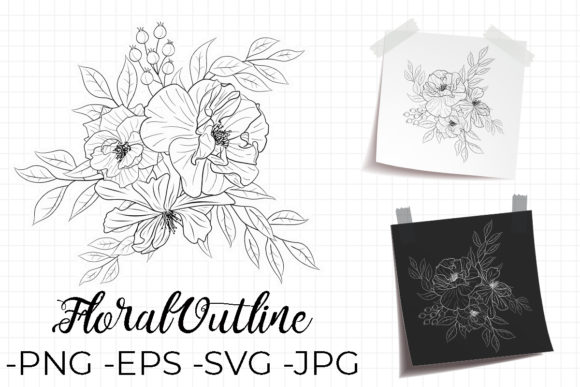
This week, I pulled up the Line Drawing Flowers Arrangement Bouquet. On paper, it sounds simple: an outline flower in EPS, SVG, PNG, and JPG formats. But simplicity in embroidery is often harder to execute than complexity. A line art design relies entirely on the quality of its strokes and the confidence of its negative space. If the lines are too thin, they disappear. If they are too thick, they look clumsy. Let’s break down whether this Crafts and Graphics asset actually holds up for real-world application.
The First Impression: Mood and Visual Personality
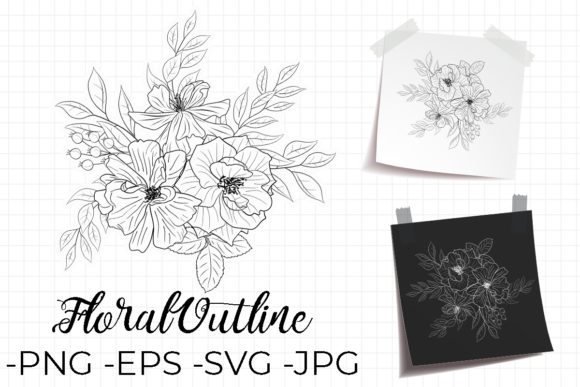
The immediate appeal of the Line Drawing Flowers Arrangement Bouquet is its clean, editorial aesthetic. It does not scream for attention; it whispers. This makes it incredibly versatile. In a sea of busy, colorful floral machine embroidery designs that can overwhelm a garment, this design offers a sophisticated, minimalist alternative. It feels modern, airy, and refined.
Visually, the arrangement suggests a loose, hand-drawn quality. For an embroiderer, this is a double-edged sword. The "hand-drawn" look implies organic curves rather than rigid geometric precision. When I previewed the layout, I appreciated that the flowers are arranged in a way that allows for natural flow. It doesn't feel like a stamped grid; it feels like a bouquet held loosely in the hand. This visual personality translates well to products that aim for a boutique, artisanal feel—think high-end linen aprons, nursery wall hangings, or delicate baby blankets.
Real-World Application: Where Does This Fit?
I have been testing various concepts for upcoming holiday collections, and the Line Drawing Flowers Arrangement Bouquet immediately jumped out as a strong candidate for several specific categories. Here is how I see it performing in actual production scenarios:
- Custom Apparel & Sweatshirt Embroidery: Because the design is essentially black and white (or single-color) line art, it works beautifully on dark fabrics where the contrast is sharp. Imagine a charcoal grey sweatshirt with crisp white outlines of the bouquet stitched on the chest. It creates a striking graphic effect without the weight of heavy fill stitches.
- Tote Bag Design: Canvas tote bags are a staple for any Etsy seller or craft fair vendor. A large-scale version of this bouquet on the front of a natural canvas bag looks professional and timeless. It doesn't date quickly, unlike trendy patterns that might fade in popularity within a season.
- Baby Embroidery & Nursery Decor: The soft, outlined nature of the flowers is gentle enough for baby items. Whether used on a muslin swaddle, a bib, or a pillow cover, the design lacks the harshness of dense satin blocks. It feels safe and tender, which resonates with parents looking for personalized gifts.
- Kitchen Textiles: Tea towels and kitchen aprons benefit from this kind of graphic simplicity. The design is legible even at smaller sizes, making it perfect for corner placements on dish towels. It adds a touch of elegance to everyday household items.
For commercial embroidery projects, this design offers a high perceived value with relatively low material cost. Since it relies on outline stitches rather than massive amounts of thread for fills, you save on thread usage while still delivering a substantial-looking product. This margin efficiency is crucial for small business owners trying to keep prices competitive.
Technical Considerations and Stitching Clarity
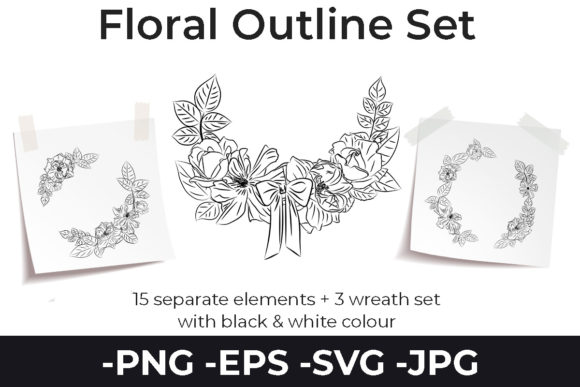
As a reviewer, I must address the technical realities of using this machine embroidery design. The product description mentions separate elements in EPS and SVG formats, which is excellent news for customization. However, converting vector lines into embroidery stitches requires careful planning.
Stitch Density and Type: Line art typically utilizes running stitches or narrow satin stitches. You need to ensure your digitizing software or service provider sets the correct tension. If the tension is too loose, the lines will pucker. If the density is too high, the fabric will become stiff and lose its drape. I recommend starting with a light-to-medium density setting to maintain the airy feel of the original illustration.
Fabric Texture Compatibility: This design shines on smooth, stable fabrics. Cotton, linen, and tightly woven polyester blends are ideal candidates. However, caution is advised when working with textured fabrics like terry cloth or chunky knits. The fine lines of the Line Drawing Flowers Arrangement Bouquet may get lost in the texture of the fabric, resulting in a muddy appearance. Similarly, stretchy fabrics require a strong stabilizer to prevent distortion during stitching.
Where to Exercise Caution
No design is perfect for every situation. There are specific scenarios where you should think twice before using this asset:
- Small Hoop Sizes: While the design is scalable, extremely small details in the flower centers or stems may become indistinguishable if hooped in a very small area. Always inspect the smallest elements at 100% scale before committing to production.
- Curved Surfaces: Attempting to stitch this flat arrangement onto a curved surface like a baseball cap or a rounded mug can distort the symmetry of the bouquet. It is best suited for flat surfaces like tote bags, apparel chests, and flat patches.
- Dense Stitch Areas: Although primarily line art, if you choose to add decorative accents or fill certain petals, be mindful of the total stitch count. Overloading a line art design with heavy fills defeats the purpose of its minimalist aesthetic.
- Dark Fabric Without Proper Contrast: While white thread on dark fabric works well, using black thread on dark fabric will render the design invisible. Ensure you are using appropriate thread colors to maintain visibility.
Practical Designer Notes for Implementation
Before you rush to list this as a small shop product, here are my practical tips for getting the best results:
- Test on Scrap Fabric: Never assume a design will stitch perfectly on the first try. Use scrap pieces of your intended final fabric to test tension, stabilizer type, and thread choice.
- Check Licensing: The product features mention "Full editable," but this does not automatically grant commercial rights for the finished goods. Verify the license terms to ensure you are allowed to sell physical items made from this design, especially if you are a craft business owner.
- Use Proper Stabilizer: For line art, tear-away or cut-away stabilizers work best depending on the fabric. Too much stabilizer can cause ridges under the stitching; too little can lead to puckering.
- Mockup Before Production: Create digital mockups using the provided PNG and JPG files. View them on different colored backgrounds to ensure the contrast works. This helps in creating attractive printable mockups for your online store listings.
- Inspect Small Details: Zoom in on the SVG file. Are the lines continuous? Are there any gaps that might cause stitching errors? Cleaning up minor artifacts in the vector file before converting to embroidery format can save hours of troubleshooting.
Final Verdict
The Line Drawing Flowers Arrangement Bouquet is a solid addition to any designer's library. It is not flashy, but it is reliable, elegant, and highly adaptable. It bridges the gap between traditional floral motifs and modern graphic design, making it suitable for a wide range of audiences—from hobbyists making personal gifts to professionals building a brand identity.
If you are looking for a design that conveys professionalism, simplicity, and timeless beauty, this is a strong contender. Just remember to respect the limitations of line art by choosing the right fabrics and stabilizers. When executed correctly, this design can elevate a simple handmade product into something that feels custom-made and premium. For digital product sellers, it also serves as an excellent base for creating varied colorways and styles, maximizing the utility of your initial purchase.